
Logistics & Supply Chain
One partner. Complete warehouse modernization.
From enterprise WMS deployment and AI fleet orchestration to multi-vendor robotics and the private 5G underneath them, we design, deploy, and manage your whole warehouse stack.
The complete industrial stack
Four tiers, one accountable partner
Niche vendors supply one piece of the puzzle and leave you to integrate the rest. We engineer and deploy the whole stack, which is what removes the finger-pointing when something goes wrong. Select a layer to see what sits in it.
Enterprise WMS deployment & integration
Deployment, customization, and migration of the warehouse management platform that runs your operation, integrated bidirectionally, not bolted on.
- SAP
- Manhattan Associates
- Blue Yonder
- REST / GraphQL APIs
Software orchestration & applied AI
Our Warehouse Intelligence System is the traffic conductor across every brand on the floor: cross-fleet routing, traffic heatmaps, and predictive analytics on open standards.
- Warehouse Intelligence System
- VDA 5050
- Cross-fleet routing
- Predictive analytics
Open multi-vendor robotics fleets
Turnkey deployment of AMRs, heavy autonomous tuggers, and fixed industrial arms, selected on fit, not on which vendor we happen to resell.
- AMRs & pallet transport
- Heavy towing & yard
- Industrial arms
- Mixed-brand fleets
Managed private wireless infrastructure
Private 5G and CBRS coverage engineered for high-bay racking, cold storage, and outdoor yards, so the fleet above never loses its link.
- Private 5G / CBRS
- High-bay & cold storage
- Outdoor yard coverage
- Edge compute
Wherever your operation is starting from
Nobody replaces a working warehouse in one project. Each stage below is a complete deployment that pays for itself before the next one becomes worth doing.
Manual scanning, patchy coverage
Where you are
Inventory moves on handheld scanners over Wi-Fi with known dead zones, and the yard is coordinated by phone and paper. Nothing outside the building is really visible.
What we do
We deploy private cellular across the warehouse and the yard together, so coverage stops being the thing every other project has to work around.
Connected site, manual decisions
Where you are
Scanners, sensors, and cameras are connected and generating data, but people are still making the routing and dispatch calls, and dock work is checked by hand.
What we do
We add computer vision at dock doors and gates for automatic audit, plus edge analytics that turn position and telemetry data into decisions, not dashboards.
Self-orchestrating operation
Where you are
You are running automation already, possibly from several vendors, and the constraint is that the pieces do not coordinate with each other.
What we do
We orchestrate multi-brand robotics on one traffic plane, integrate it with your WMS, and add predictive dispatch so the site schedules ahead instead of reacting.
Where modernization fails
Four friction points we solve at the infrastructure layer
Warehouse and factory modernizations rarely fail on the robots. They fail on the seams between software, machines, and the network underneath.
Fragmented systems and integration delays
Today
A WMS from one vendor, AMRs from another, and a third-party contractor for connectivity. Integration becomes a months-long project of broken APIs and shifting blame.
With Trilogy NextGen
We deploy the WMS with hooks already built into the orchestration layer, the robotics fleet, and the edge compute nodes, so integration is part of the delivery, not a phase after it.
Multi-brand fleet traffic and deadlocks
Today
Robots from different manufacturers run on separate proprietary controllers. At high-density aisles they block each other, and no single system has the authority to resolve it.
With Trilogy NextGen
The Warehouse Intelligence System ingests position telemetry across all brands via VDA 5050 and calculates collision-free paths for the whole floor, not one vendor's slice of it.
Network drops in high-bay metal environments
Today
Wi-Fi handoff delays between access points trigger emergency safety stops on moving AGVs and AMRs. Every stop is a manual reset and lost throughput.
With Trilogy NextGen
Private 5G and CBRS infrastructure is designed for mobility, with cell-to-cell handover that holds across indoor high-bays and outdoor container yards on one network.
Fixed automation waiting on mobile fleets
Today
Picking and palletising cells idle while the tugger that feeds them is stuck in traffic or delayed by network congestion.
With Trilogy NextGen
Edge orchestration synchronizes fixed cells with arriving mobile robots in real time, so expensive stationary automation spends less of its day waiting.
Partner documents have not been published yet. Run the seed script or add them in the Studio.
The technology underneath
What the infrastructure makes possible
These are the specifications of the technologies we deploy. What they translate to in your building depends on the site, and we would rather survey it than guess.
99.999%
Availability class
The reliability tier private cellular infrastructure is engineered toward, against best-effort industrial Wi-Fi.
Sub-15ms
Deterministic latency
Low, predictable round-trip time, which is the requirement for real-time synchronization between WMS, orchestration, and robots.
VDA 5050
Open fleet standard
The interface standard that makes cross-vendor fleet coordination possible without a proprietary controller.
Fewer radios
Coverage density
Cellular covers substantially more area per radio than Wi-Fi in racked, high-ceiling space, reducing the estate to install and maintain.
Figures reflect published vendor and standards specifications for the technologies we deploy, not measured results from a specific Trilogy NextGen deployment. Real-world performance depends on site conditions, spectrum, and facility layout.
What operators are trying to achieve
- Fewer fleet stalls caused by dropped connections
- Higher throughput from removing cross-vendor traffic deadlocks
- One accountable partner instead of three vendors and a finger-pointing exercise
- A network that covers the yard as well as the building
In the field
What the infrastructure makes possible
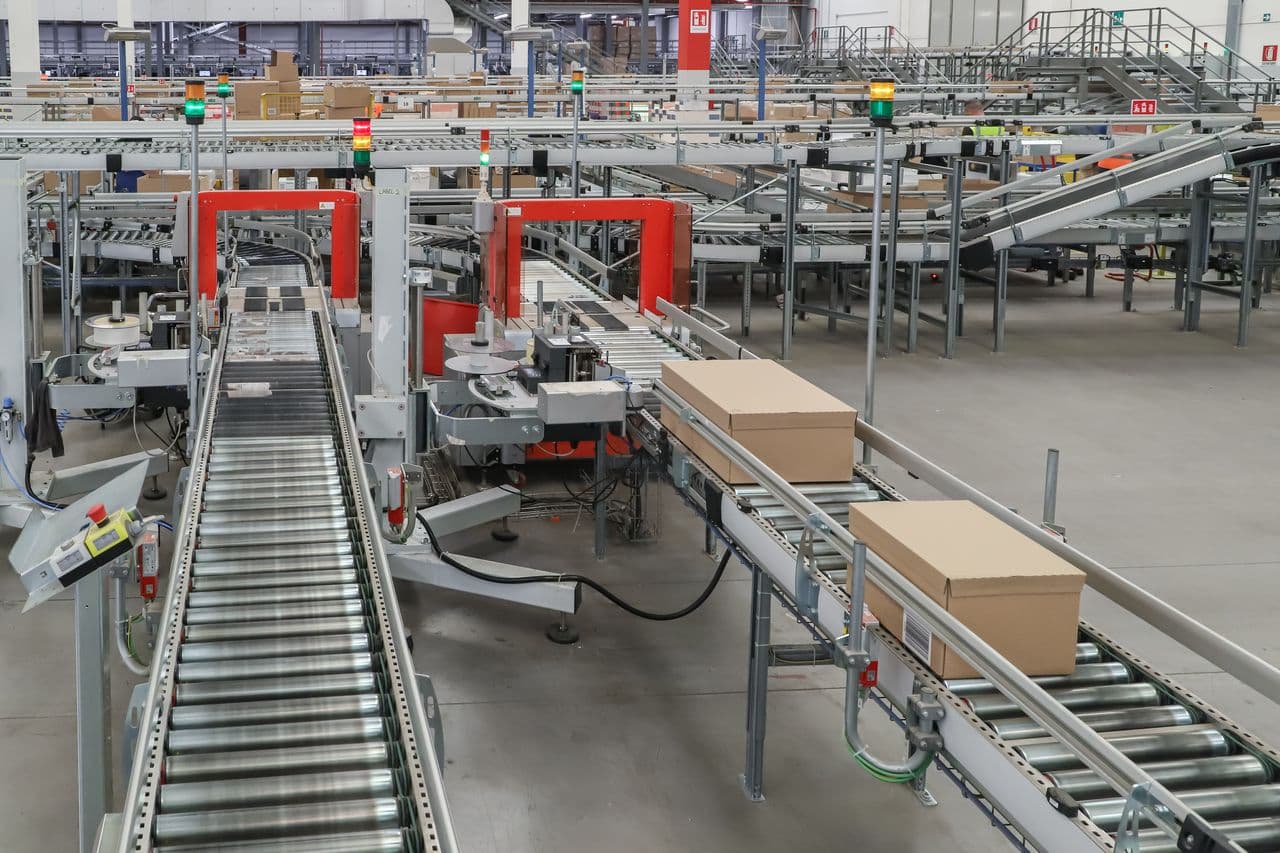
Sortation integrated with the WMS above it rather than running alongside as a separate system.
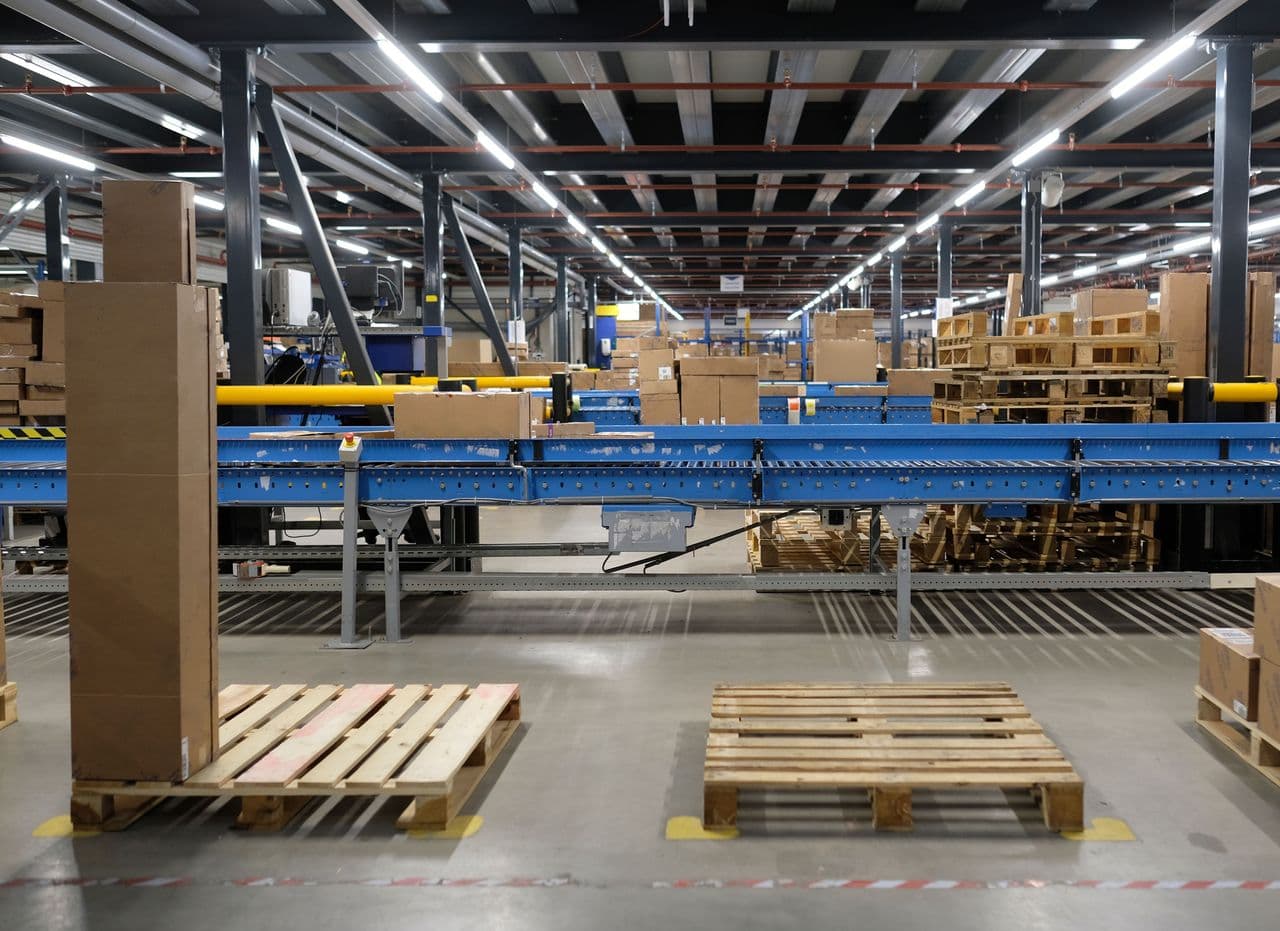
High-bay racking, cold storage and the outdoor yard under one wireless layer.
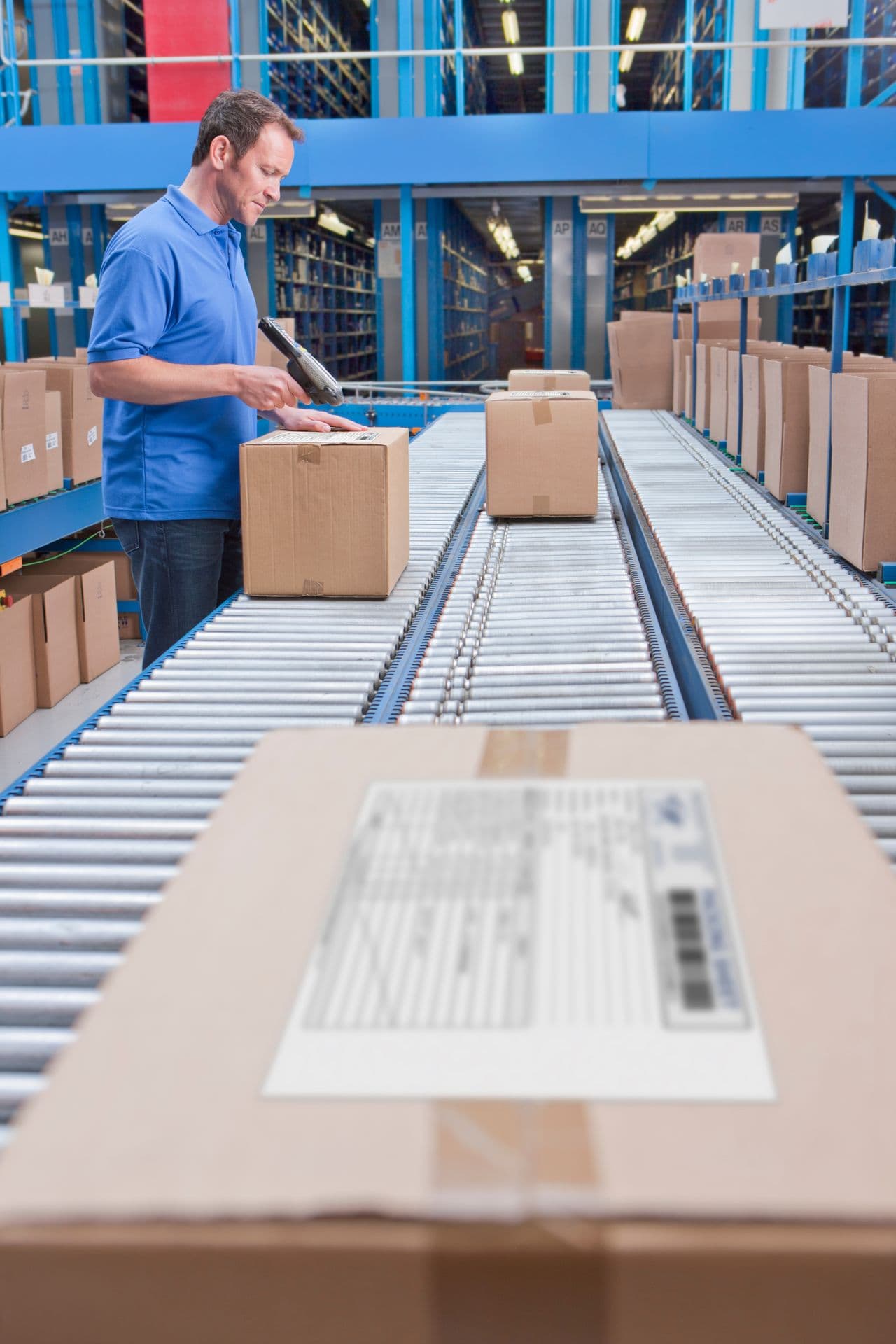
Scanning and pick confirmation that keep working in the aisles where the signal used to drop.
Request a full-stack architecture assessment
Speak with our automation architects about your facility: WMS readiness, robotics compatibility, and a private 5G coverage plan for the whole footprint including the yard.