
Private Cellular Networks
Private LTE and 5G, engineered for your building
Private LTE and 5G networks, including CBRS, designed around what has to run on them: robot fleets, push-to-talk, cameras and edge AI. We survey, design, deploy and manage the network, and because we also write the software and integrate the fleets, it is engineered for the workload rather than sold as a product.
Why private cellular
Wi-Fi and private cellular, side by side
Industrial Wi-Fi works well for people and fixed devices. Moving equipment across a large, metal-dense site is where it struggles. Switch networks to see the same robot on the same route.
Many small access points, each a handoff. In steel racking the link drops mid-handoff and the robot stops until someone resets it. Outside the building there is no coverage at all.
- Access point
- Robot
Coverage designed for your site
A private network is designed for your building, including steel racking, concrete, cold storage and the yard outside. Coverage is planned and measured for the site.
Predictable performance
Cellular networks schedule traffic, so performance is more predictable than on shared Wi-Fi. That matters when a moving robot depends on a steady connection.
Reliable handover
Devices move between cells without the handoff gaps that stop mobile equipment or drop push-to-talk calls.
Your data stays yours
Traffic stays on infrastructure you control, with SIM-based identity and your own security policy.
What we build
The parts of a private network
A private network is more than radios. Select each part to see what it does and what we decide for it during design.
Spectrum
The radio frequencies the network uses. In the US, most private networks run on CBRS, a shared band managed through a Spectrum Access System. Licensed or leased spectrum is an option at some sites.
Who we work with: Spectrum access is coordinated through the SAS for CBRS, or arranged with the license holder.
Decided during design
- Which bands are available at the address
- How much capacity the site needs
- The registration the band requires, including where a certified installer has to file
Radios
Indoor and outdoor radios that give the site coverage. Placement comes from the survey and the coverage model, based on racking, materials and the yard.
Who we work with: Nokia, Ericsson, Celona, GXC and Samsung.
Decided during design
- Number and placement of radios
- Indoor and outdoor mounting
- Where handovers happen along the routes machines take
Core
The software that authenticates devices, routes traffic and applies policy. It can run on site, in your cloud tenant, or as a managed service.
Who we work with: Core options from the same radio vendors, chosen to match the radios and how you want to operate.
Decided during design
- Where the core runs
- How it connects to your IT network and security tools
- Redundancy for sites that cannot go down
Edge compute
Servers on site, next to the network, for applications that need to run locally: video analytics, fleet control and AI models on your own data.
Who we work with: Standard enterprise servers, sized to the applications you plan to run.
Decided during design
- Which workloads run on site
- Server sizing for those workloads
- How data flows to your cloud or data center
Devices
Everything that connects with a SIM or eSIM: rugged handsets, routers and gateways, cameras, sensors, tablets and robots.
Who we work with: Rugged handsets from Sonim and RugGear, plus routers, cameras and robots from the vendors you already use.
Decided during design
- Which devices support the chosen bands
- SIM and eSIM provisioning
- Gateways for equipment without a cellular radio
Operations
Monitoring, updates, device management and support once the network is live. We can run it, or train your team and hand it over.
Who we work with: Managed by us, by your team, or shared.
Decided during design
- Who operates the network day to day
- Monitoring and alerting
- Support hours and response
What goes wrong
Three connectivity failures that stop operations
Wi-Fi cannot hold a moving fleet
Today
Access point handoff delays in metal-dense environments drop connections on moving vehicles. Each drop is a safety stop, a manual reset, and lost throughput.
With Trilogy NextGen
Private LTE and 5G are built for devices on the move, with handover between cells as a standard part of the technology.
Coverage stops at the door
Today
Indoor Wi-Fi and outdoor connectivity are usually two separate systems with two sets of problems, and devices break as they cross between them.
With Trilogy NextGen
One private cellular footprint spans high-bay interiors, docks, and outdoor yards, so a tugger or a handset moves across the whole site on one network.
Access point sprawl
Today
Achieving usable coverage in racked, high-ceiling space often means a very large number of access points, each one a device to power, mount, and maintain.
With Trilogy NextGen
Cellular radios cover substantially more area per unit in these environments, which reduces the physical estate you have to install and keep running.
Built on infrastructure you already trust
We are not tied to a single manufacturer. We select and deploy from the vendors below based on the size of the site, the spectrum available, and whether your team or ours will operate the network day to day.
Core network & RAN
 Nokia (opens in a new tab)Carrier-grade private wireless at industrial scale.
 Ericsson (opens in a new tab)Enterprise private 5G with carrier heritage.
 Samsung (opens in a new tab)Private network infrastructure and rugged devices.
Enterprise platforms
 Celona (opens in a new tab)Enterprise-simple private cellular on CBRS.
 GXCPrivate 5G with integrated edge compute.
Network & connectivity


How we deploy
From survey to supported network
- 1
RF survey and design
We survey the site and model coverage against your actual racking, materials, and yard layout.
- 2
Spectrum and licensing
We determine the right spectrum route for your location and handle the registration that goes with it.
- 3
Install and commission
Radios, core, and edge compute installed and commissioned, with devices provisioned onto your network identity.
- 4
Manage and support
Ongoing monitoring, optimization, and support, or a handover to your team if you would rather run it yourself.
Build your plan
Is the network the right first step?
Pick your industry and what is slowing you down. The fit finder shows whether coverage, the fleet or the integration layer should come first, and what a sensible sequence looks like.
In the field
Engineered for the building, not the map
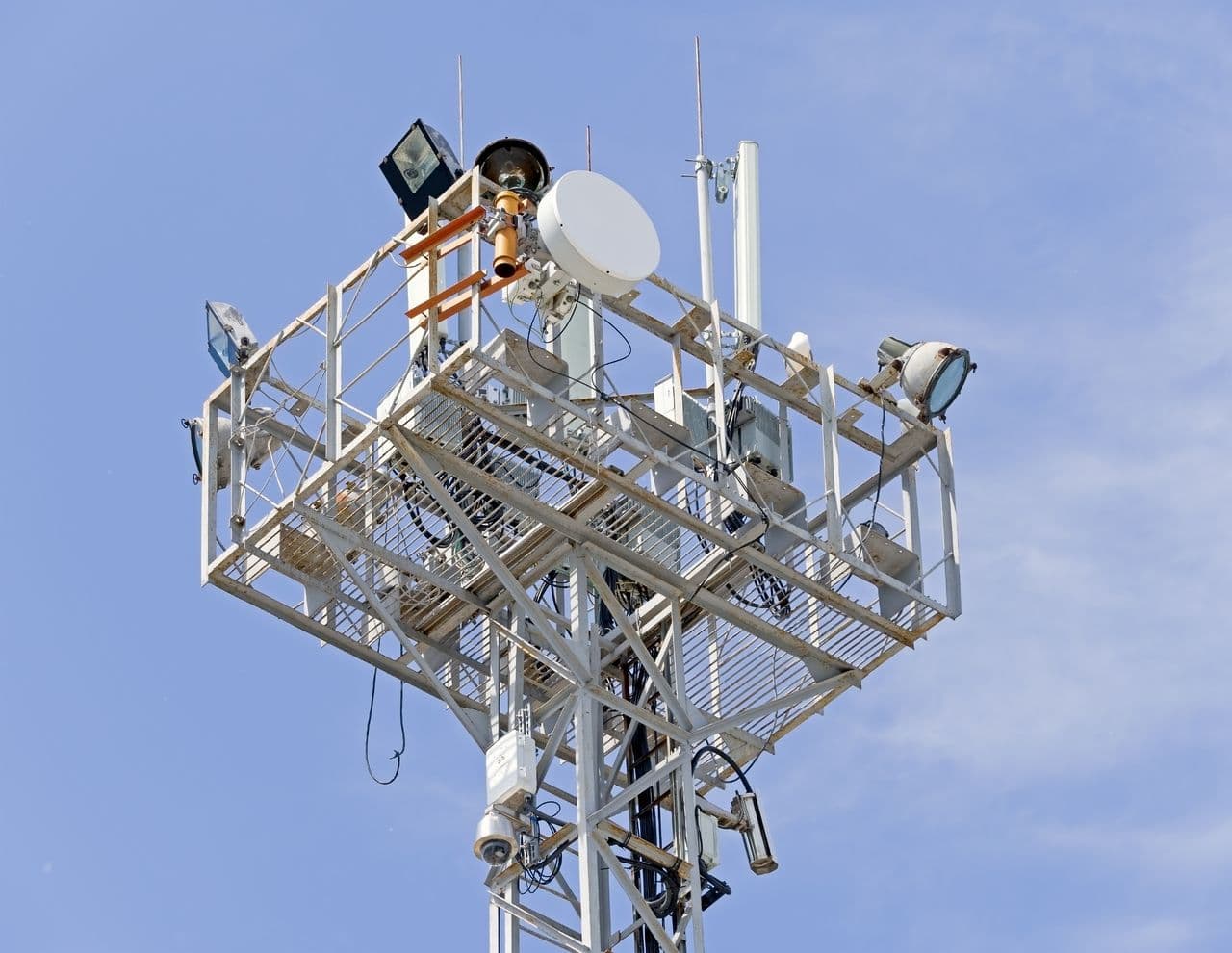
Spectrum and radio plan sized to your site, rather than to whatever the nearest macro cell happens to reach.
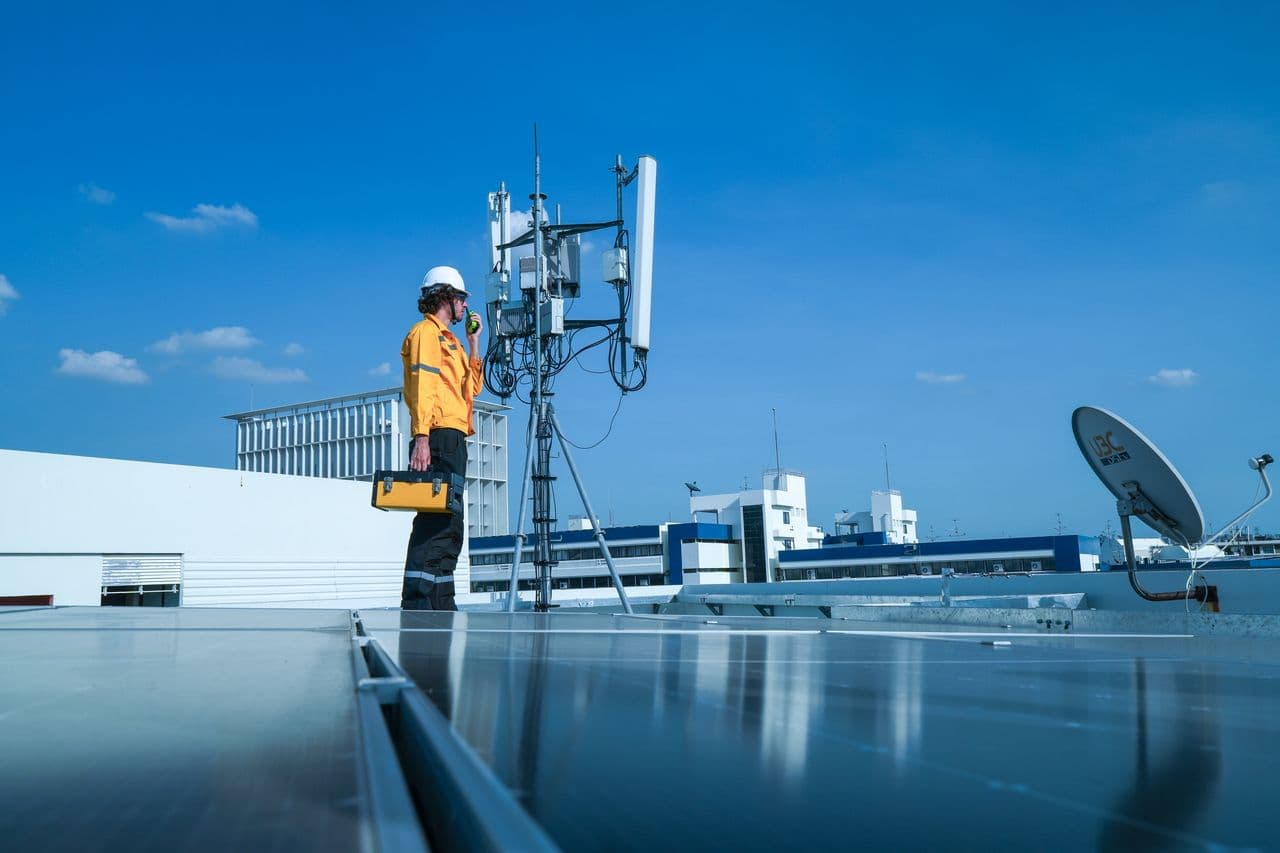
Every install is measured on site and signed off against the survey it was planned from.

Coverage follows the work, including the yard and the corners Wi-Fi never held.
Find out what coverage would take
Send us the facility size, the materials, and what has to stay connected. We will come back with a realistic view of spectrum, radio count, and effort.