
Robotics & Automation
Any robot. One fleet orchestration layer. No disconnects.
We integrate multi-vendor robotics fleets and run them as one system: AMRs, heavy autonomous tuggers and fixed industrial arms, orchestrated on a single software plane over VDA 5050 and other open interfaces, connected to your WMS, and carried by a private cellular network we also build.
Use cases
Where automation fits in your facility
Click any area of the floor plan to see what gets automated, the equipment we typically deploy, and the systems it ties into. Most projects combine several of these, often with more than one vendor.
Click an area of the floor plan or pick one below.
Docks
Docks and pallet moves
Autonomous forklifts and pallet AMRs handle repetitive moves between the dock and storage, freeing drivers for work that needs a person.
- What gets automated
- Putaway from inbound doors to reserve racking, and replenishment to outbound staging.
- Typical equipment
- Autonomous forklifts
- Pallet AMRs
- Integrations
- WMS putaway and replenishment tasks
- Dock door status
- Network requirements
- Reliable coverage at the dock doors and in high-bay racking, where Wi-Fi is often weakest.
Key considerations
Robots share aisles with manual forklifts and pedestrians, so traffic rules and zones are defined before deployment.
Partners: Agilox, SEER
Storage
Storage and case handling
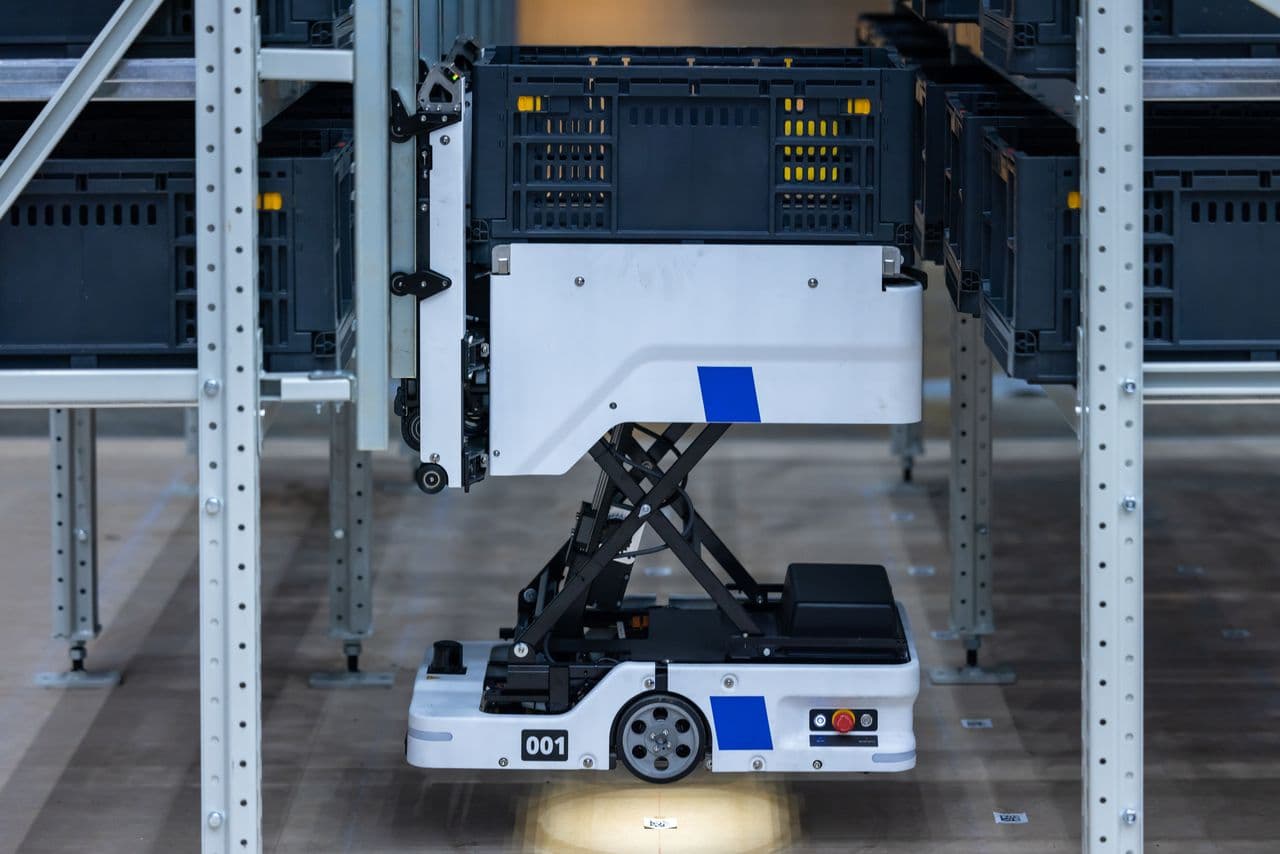
Case-handling robots bring totes and cartons from storage to pick stations, so pickers spend less time walking.
- What gets automated
- Goods-to-person picking and tote retrieval from shelving and racking.
- Typical equipment
- Case-handling AMRs
- Goods-to-person robots
- AS/RS
- Integrations
- WMS order waves and pick confirmations
- Pick station displays
- Network requirements
- Consistent coverage between tall shelving, with capacity for the whole fleet moving at once during peak waves.
Key considerations
The fleet and station layout are sized for peak volume, not average volume.
Kitting
Kitting and small-batch moves
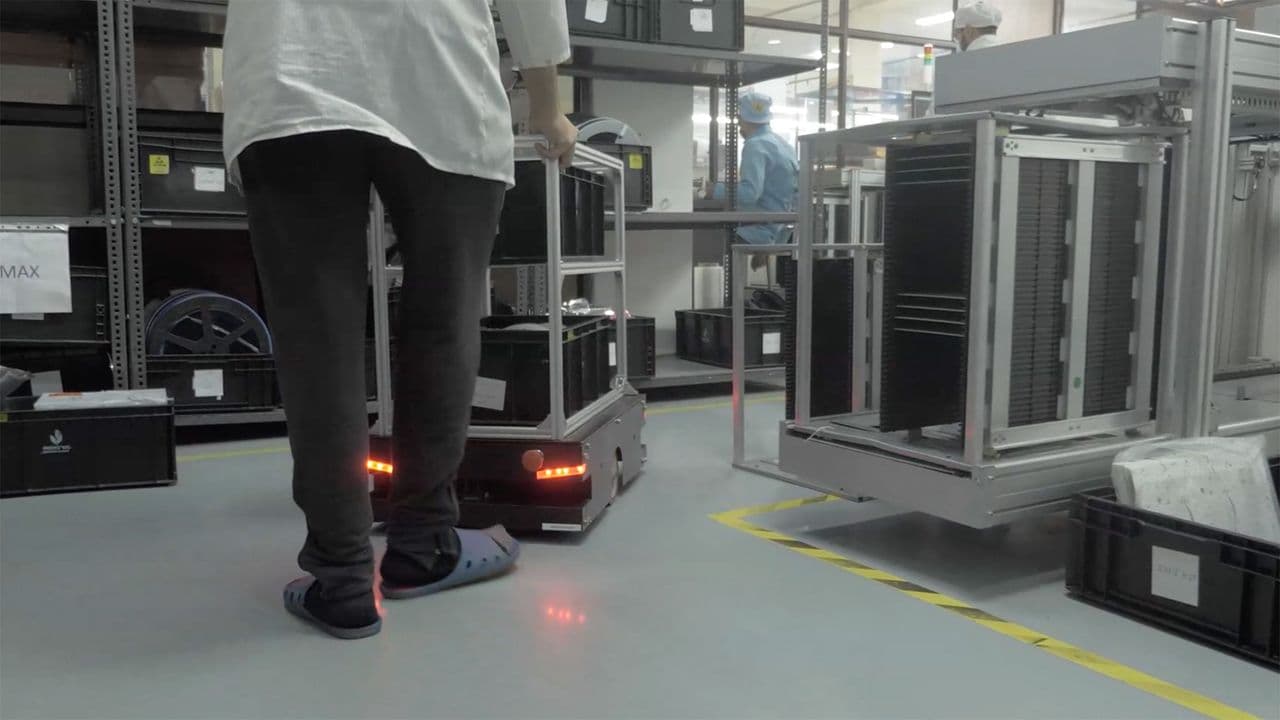
Collaborative mobile robots move carts and kits between work areas, following routes your team can teach and change.
- What gets automated
- Moving kits, carts and work in progress between cells, stores and packing.
- Typical equipment
- Collaborative mobile robots
- Cart-towing AMRs
- Integrations
- MES work orders
- Call buttons and tablets
- Network requirements
- Seamless handoff through narrow aisles and doorways.
Key considerations
Routes change as the floor layout changes, so your team needs to be able to update them without a service call.
Partners: Peer Robotics
Line-side
Line-side replenishment
Autonomous tuggers deliver parts from stores to the production line on a schedule or when the line calls for them.
- What gets automated
- Towing parts carts from the warehouse to production and returning empties.
- Typical equipment
- Autonomous tuggers
- Tow trains
- Integrations
- ERP and MES kanban signals
- Line-side call points
- Network requirements
- Continuous coverage along the full route, including transitions between the warehouse and production.
Key considerations
Speeds, stopping distances and crossing rules for heavy loads are set with your safety team.
Partners: Ati Robotics, Cyngn
Cells
Robotic cells and machine tending
Industrial arms handle machine tending, welding and assembly, while mobile robots keep the cells supplied.
- What gets automated
- CNC tending, welding and assembly cells, with mobile robots delivering raw parts and removing finished ones.
- Typical equipment
- Industrial arms
- Collaborative arms
- Mobile manipulators
- Integrations
- PLC and cell controllers
- MES job status
- Network requirements
- Wired connections to cell controllers, and wireless for the mobile robots serving them.
Key considerations
Cell output depends on timely material delivery, so the arm and the mobile robots are coordinated as one workflow.
Partners: Fanuc, Yaskawa
End of line
End-of-line palletizing
Robotic arms build pallets at the end of the line and mobile robots move them to outbound staging.
- What gets automated
- Case palletizing and depalletizing, wrapping and labeling, then transfer to outbound.
- Typical equipment
- Palletizing arms
- Pallet AMRs
- Conveyors
- Integrations
- WMS shipping orders
- Label print and apply
- Conveyor controls
- Network requirements
- Stable coverage at the cell and along the route to outbound staging.
Key considerations
Mixed-SKU pallet patterns and changeovers need to be planned early to keep the schedule.
Partners: Fanuc, Yaskawa
Fleet ops
Charging and fleet operations
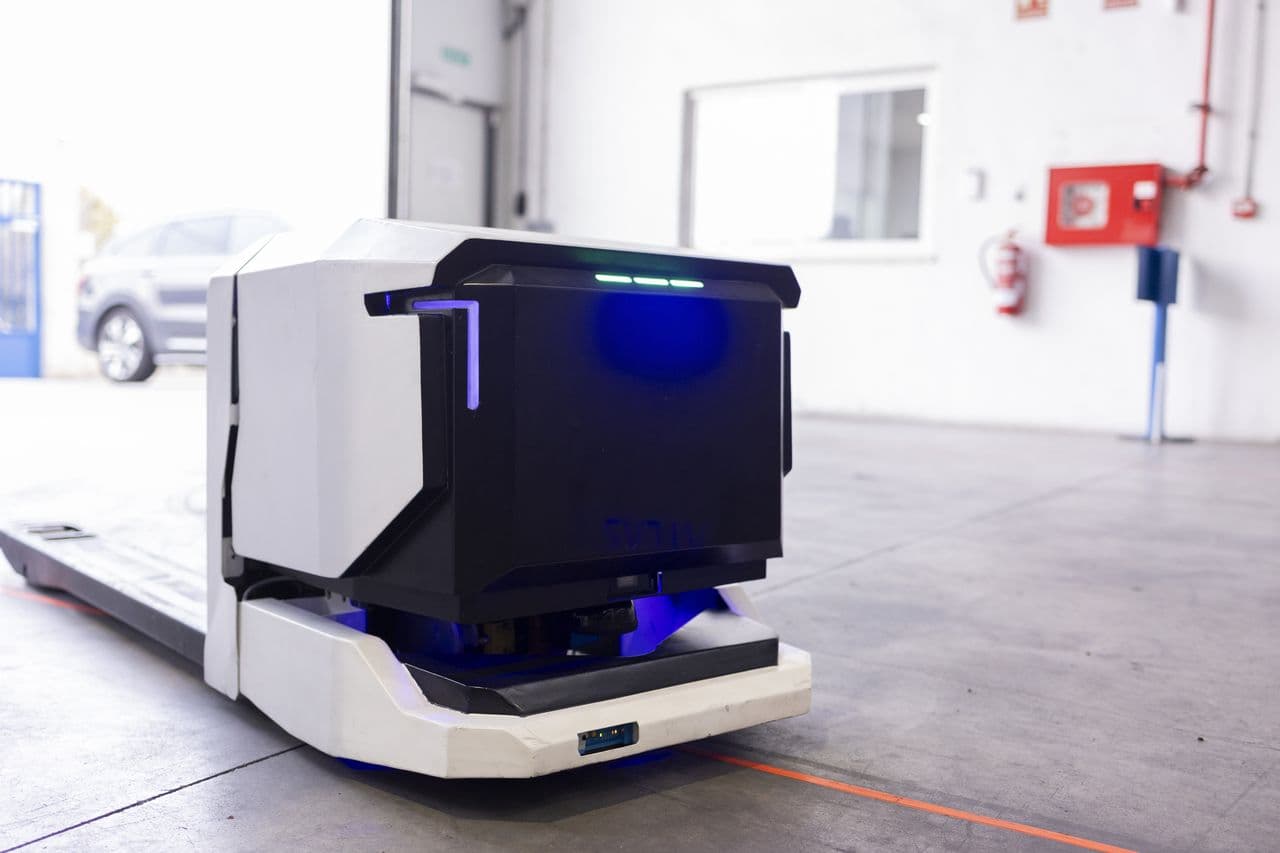
A single view of every robot across vendors: location, status, charging and maintenance needs.
- What gets automated
- Charge scheduling, fleet health monitoring, fault handling and traffic rules across brands.
- Typical equipment
- Chargers
- Fleet manager
- Traffic control
- Integrations
- VDA 5050 and vendor APIs
- Maintenance systems
- Alerts to crew devices
- Network requirements
- Coverage everywhere robots travel, since traffic control depends on every robot reporting its position.
Key considerations
Each vendor provides its own console. We consolidate them into one view your team can actually use.
Heavy bay
Heavy industry bays
In crane-served bays, cameras and sensors track material as it moves and feed the crane management system you already use.
- What gets automated
- Tracking material identity and location as overhead cranes pick, move and place it, where handheld scanning is impractical.
- Typical equipment
- Crane-mounted cameras
- Positioning sensors
- Edge vision models
- Integrations
- Crane management and HMI systems
- Inventory and shipping systems
- Network requirements
- Coverage through steel structures and high-heat areas, with edge computing near the cameras.
Key considerations
Heat, dust and vibration drive hardware choices, so a site survey comes first.
Partners: Pepperl+Fuchs
Yard
Outdoor yard and campus moves
Autonomous industrial vehicles move loads between buildings and across the yard on one network, indoors and out.
- What gets automated
- Building-to-building transfers, trailer staging and yard moves alongside truck traffic.
- Typical equipment
- Autonomous industrial vehicles
- Yard tuggers
- Integrations
- Yard management systems
- Gate and dock scheduling
- Network requirements
- A single private cellular network covering indoor and outdoor areas, so vehicles stay connected between them.
Key considerations
Outdoor operation has to account for weather, truck traffic and pedestrians.
Partners: Cyngn
Multi-vendor fleet orchestration
Every brand on the floor, coordinated as one fleet
Robots from different vendors do not see each other. We put them under one fleet orchestration layer on open interfaces such as VDA 5050, connect it to the WMS or MES that decides what moves, and run it on a network built for it.
See the difference
A and B are robots from two different vendors
Each fleet manager only sees its own robots. Both reach the crossing, both detect an obstacle, and both wait for the other to move. Someone walks over and resets one.
How the stack fits together
Your business systems
Decide what needs to move, and when.
- WMS
- ERP
- MES
- Yard management
Integration layer
We build thisTurns orders and signals into robot tasks, and reports completions back.
- Task APIs
- Event pipelines
- Middleware
Orchestration and traffic
We build thisOne view of every robot. Reserves crossings and aisles, assigns work, schedules charging.
- Fleet view
- Traffic control
- Charging
Open interfaces
How each vendor's fleet is brought under the same control plane.
- VDA 5050
- Vendor APIs
- PLC and OPC UA
The machines
Chosen per job, from whichever vendor fits it best.
- Forklift AMRs
- Tuggers
- Case handlers
- Arms
- Vision
Private cellular underneath
We build thisOne network indoors and across the yard, so no robot loses its link at a doorway.
- Private LTE and 5G
- Indoor and outdoor
Edge vision
Machines move material. Cameras can say where it went.
Automation is only as good as the location data it dispatches from. Where loads are lifted and set down by cranes, forklifts or robots, cameras can record each move so the next one starts from where the material actually is.
Read the ID at pick-up
A camera on the crane, truck or robot identifies the load as it is lifted, so nobody keys it in.
Record where it lands
Fixed cameras map each set-down to a numbered floor cell. The location is observed, not typed.
Feed the systems that dispatch the machines
The model runs on site and sends only the event to your WMS, MES or crane system, so the next task starts from the true location.
How we solve it
Automation is an operations problem before it is a robot problem
Most failed deployments start with a vendor demo and work backwards. We start with the movements that cost you money, then choose the machines that address them.
- 1
Assess the operation
We walk the floor and the yard and map the movements that consume labor. Vendor selection comes after this, not before.
- 2
Design the fleet mix
Pallet movement, heavy towing and fixed picking are three different problems, so the answer is usually more than one vendor.
- 3
Build the network underneath
Robots stop when connectivity drops, so the coverage design spans high-bay racking, cold storage and the outdoor yard.
- 4
Orchestrate across brands
One traffic plane coordinates machines from every vendor on the floor, on open standards such as VDA 5050 rather than a proprietary silo.
- 5
Integrate and hand over
We connect the fleet to your WMS, prove the flows, train your team, and stay on for managed support if you want it.
What goes wrong
Three failures that stall brownfield automation
Retrofitting automation into a working facility fails in predictable ways. These are the three we see most, and how the Trilogy NextGen stack answers each.
Multi-brand fleets deadlock each other
Today
Robots from different vendors run on separate proprietary software. At high-density aisles and intersections they have no shared view of each other, so they block, wait, and stall.
With Trilogy NextGen
Our Warehouse Intelligence System acts as the traffic conductor across brands, ingesting position telemetry via VDA 5050 and calculating collision-free paths across the whole fleet.
Wi-Fi handoffs trigger safety stops
Today
Industrial Wi-Fi handoff delays in steel-dense high-bays cause moving AMRs to hit emergency stops. Each one is a manual reset and a line stoppage.
With Trilogy NextGen
Private LTE and 5G provides deterministic cell-to-cell handover across indoor and outdoor space, so the fleet keeps moving where Wi-Fi would drop it.
Fixed arms sit idle waiting on mobile fleets
Today
Picking and palletizing cells stall when the tugger or pallet mover is late, so expensive fixed automation spends its day waiting.
With Trilogy NextGen
Edge orchestration synchronizes fixed cells with arriving mobile robots in real time, cutting idle cycles at drop points and conveyor handoffs.
Freedom of choice, not a hardware silo
We are vendor-independent by design. Each partner below is deployed where it genuinely fits the job, and all of them are coordinated through the same orchestration layer.
AMR & pallet transport
 Agilox (opens in a new tab)Self-organising pallet movers.
 Peer (opens in a new tab)Autonomous mobile robots for material flow.
 SeerRobotics control and navigation systems.
Heavy towing & yard
 ATI MotorsHeavy autonomous tuggers for indoor and outdoor duty.
 Cyngn (opens in a new tab)Autonomous driving software for industrial vehicles.
 CardinalAutonomous handling for heavy industrial loads.
Industrial arms & pickers
 Fanuc (opens in a new tab)Industrial robotic arms at global scale.
 Yaskawa (opens in a new tab)Motion control and industrial robotics.
Build your plan
Not sure robots are the first move?
Pick your industry and what is slowing the floor down. The fit finder shows whether fleet orchestration, the network or the integration layer should come first.
What we deploy
Real machines, on real floors
A Peer AMR working alongside people, in an aisle laid out long before anything on it was autonomous.
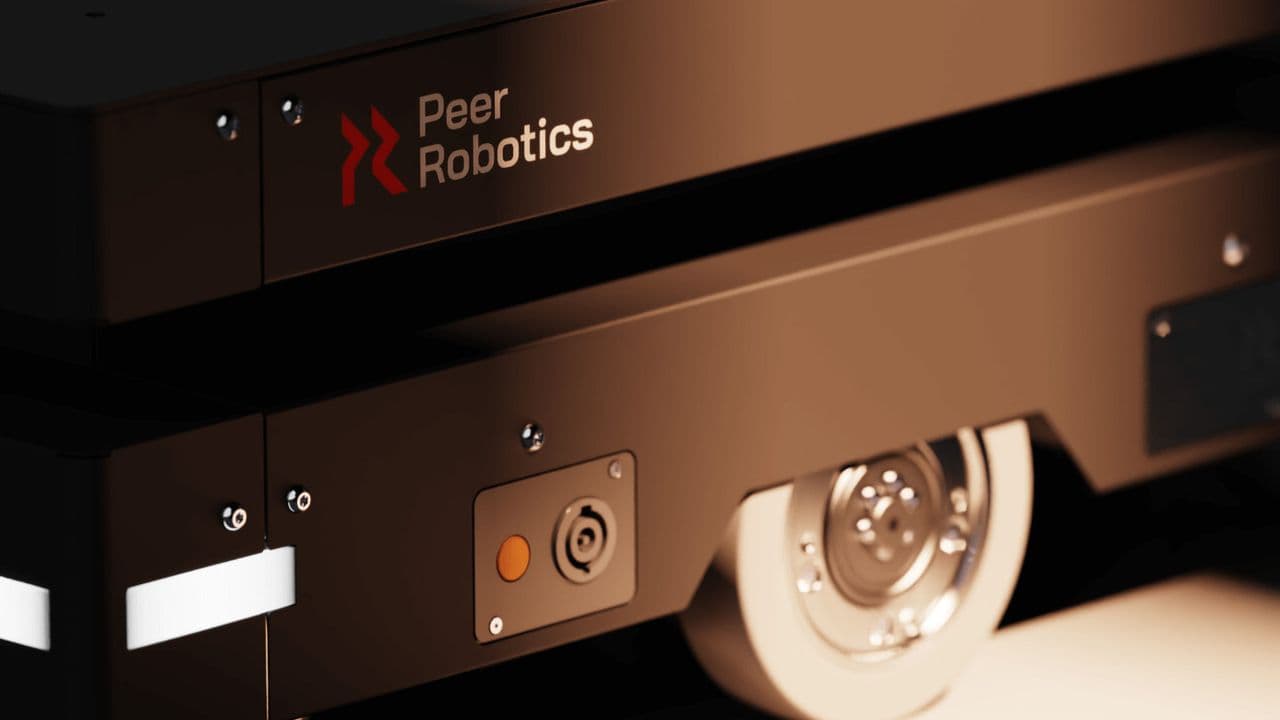
We pick machines on fit for the job, not on which vendor we happen to resell.
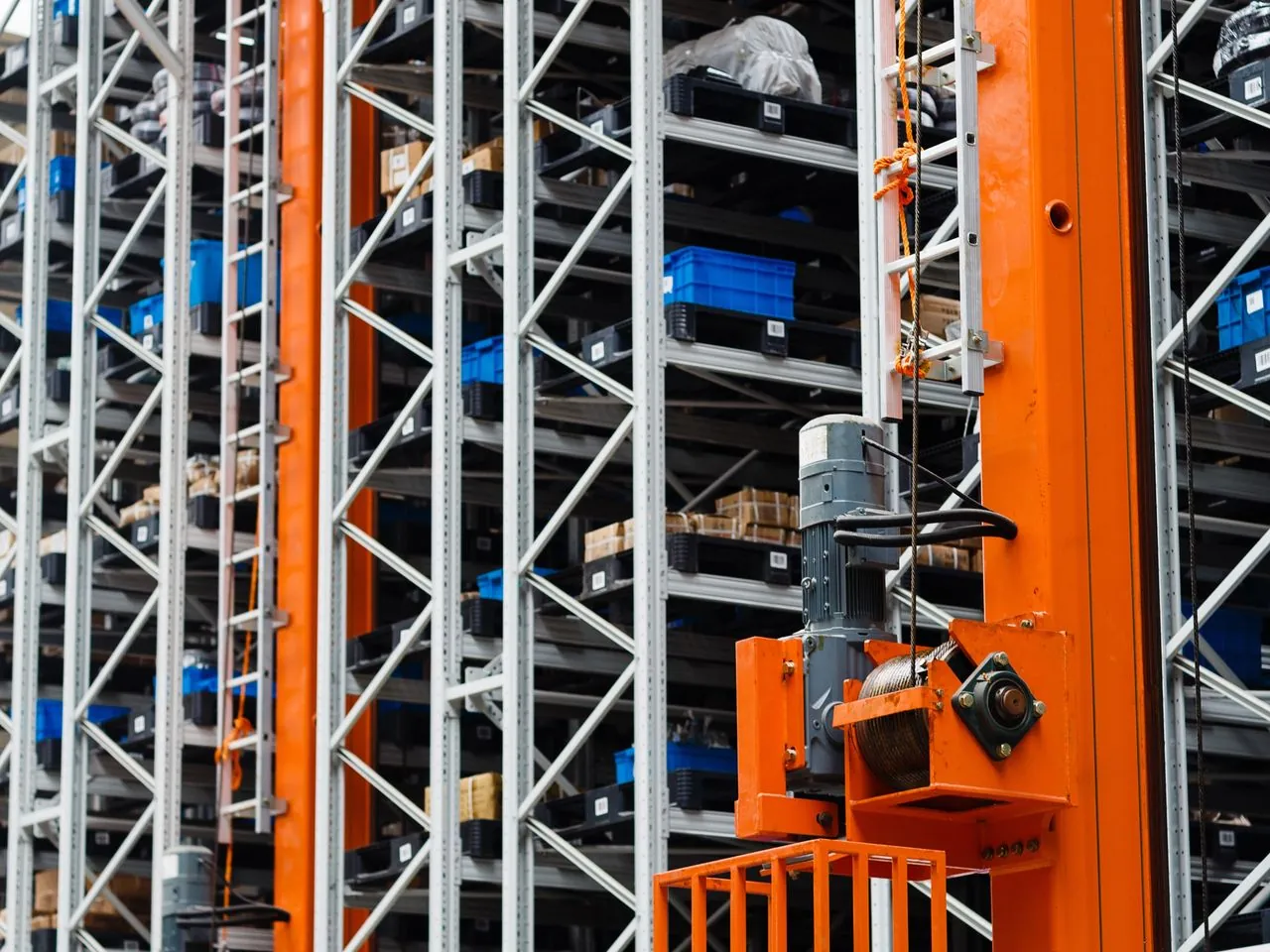
Fixed automation and mobile fleets synchronized on one plane, so neither sits waiting on the other.
Bring us your hardest material flow
Tell us what moves, how often, and what breaks. We will come back with a fleet mix, a network design, and an honest view of what automates well and what does not.